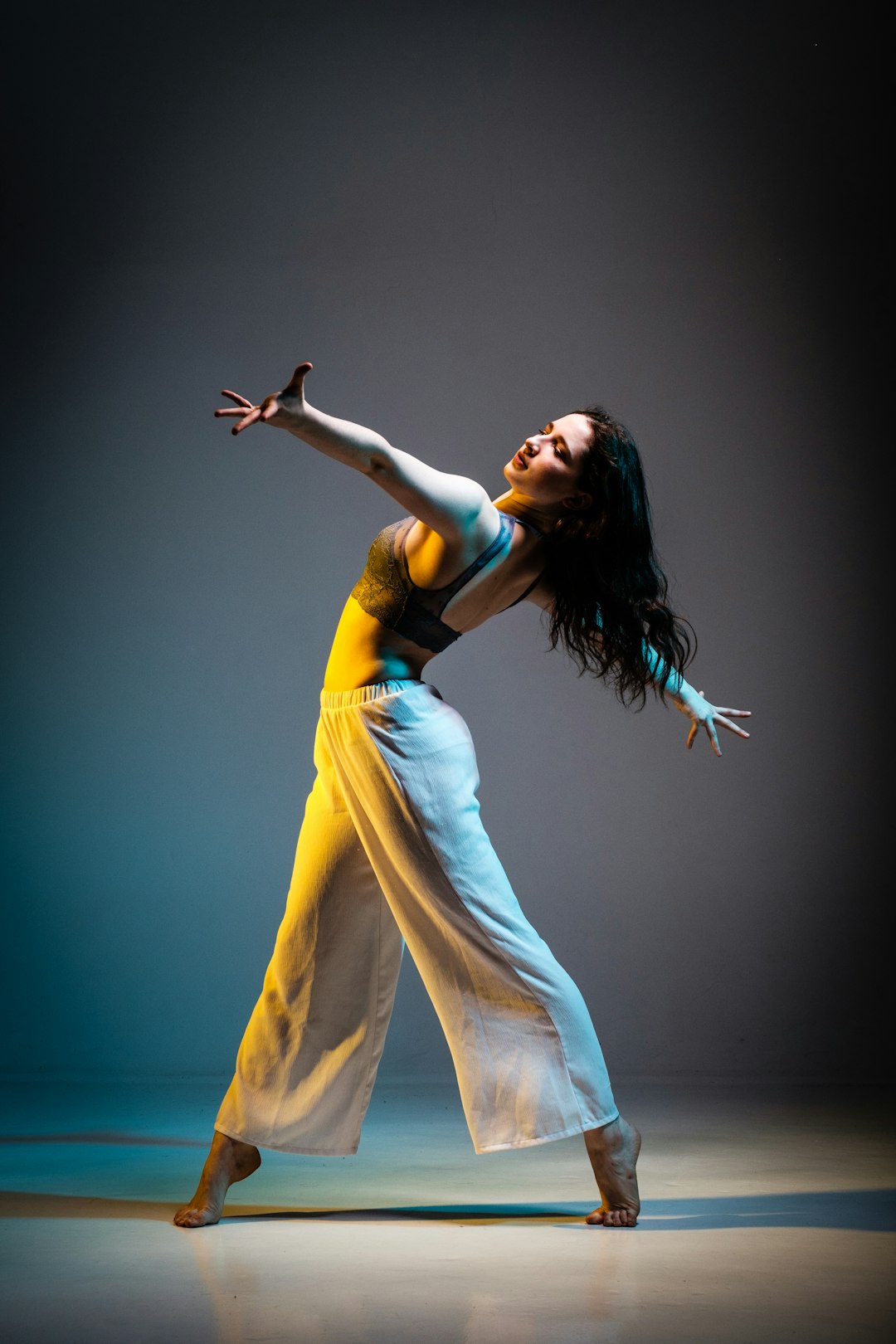
For many dancers, the idea of moving without predetermined choreography can feel terrifying. After years of training focused on executing specific steps correctly, the freedom of improvisation can seem like stepping into a void. Yet improvisation is one of contemporary dance's most powerful tools—for artistic development, authentic expression, and connecting with your unique movement voice.
At Canoru Dance School, we integrate improvisation into our curriculum at all levels because we've witnessed its transformative effects. Students who initially freeze when asked to "just move" gradually discover a wellspring of creativity they didn't know they possessed. This article explores the art and practice of dance improvisation and how it can deepen your relationship with movement.
What Is Dance Improvisation?
Dance improvisation is spontaneous movement creation—dancing without pre-planned choreography. It's a practice of being fully present in your body, responding to internal impulses and external stimuli in real time. Unlike choreography, which can be repeated and refined, improvisation exists only in the moment of its creation.
This doesn't mean improvisation is random or without structure. Experienced improvisers draw on extensive technical training, movement vocabulary, and artistic sensibility. They make rapid decisions about quality, dynamics, spatial patterns, and phrasing. The difference is that these choices happen spontaneously rather than through rehearsed repetition.
Improvisation serves multiple purposes in contemporary dance. It's a creative practice for generating new choreographic material. It's a training method that develops quick decision-making and adaptability. It's a performance form in its own right, with audiences witnessing the unrepeatable act of creation. And it's a deeply personal practice of self-discovery and authentic expression.
Overcoming the Fear of Freedom
The blank slate of improvisation intimidates many dancers, especially those trained primarily in structured technique classes. Without steps to execute, what do you do? This fear is completely normal and actually points to something important—you're being asked to trust yourself rather than following external direction.
Start small. You don't need to begin by improvising an entire dance. Practice making simple choices: explore moving just your right arm, or traveling across the floor using only walking with variations. These bounded tasks provide enough structure to feel secure while allowing creative exploration.
Remember that there's no "wrong" in improvisation. The critical voice that judges whether you're doing it correctly is the same voice that stifles creativity. Improvisation invites you to suspend judgment and simply experience movement. What feels interesting? What wants to happen next? Follow those impulses without evaluating them.
Give yourself permission to be "boring." One common block is the belief that improvisation must be constantly interesting or impressive. This pressure paralyzes creativity. Sometimes the most profound improvisations involve simple, repetitive, or subtle movements. What matters is authenticity, not entertainment value.
Building Blocks: Improvisation Structures
While improvisation is spontaneous, having structures or scores to work within actually enhances freedom. These frameworks provide parameters that focus your attention and spark creativity. At Canoru, we use various improvisation structures to develop different aspects of students' movement creativity.
Task-based improvisation gives you specific problems to solve. "Find three different ways to travel from standing to lying down." "Move using only curved pathways." "Respond to changes in the music's dynamics." The task occupies your analytical mind, freeing your body to discover unexpected solutions.
Sensory-based improvisation draws on physical sensations as source material. You might improvise from the feeling of heaviness, exploring how that quality manifests in different body parts. Or you might respond to the texture of the floor under your feet, letting that tactile information suggest movement.
Image-based improvisation uses visualization to inspire movement. Imagine you're moving through honey, or you're made of melting ice, or you're tracing patterns in sand. These images bypass literal movement and tap into embodied metaphor.
Contact improvisation, a specific form developed by Steve Paxton in the 1970s, explores the physics of bodies in contact. Partners share weight, roll around contact points, and follow momentum. This practice develops sensitivity, trust, and moment-to-moment responsiveness.
Developing Your Movement Vocabulary
When you first begin improvising, you'll likely default to familiar patterns—movements you've done many times before. This is natural. Over time, improvisation practice expands your movement vocabulary, giving you more material to draw from spontaneously.
Technique classes build vocabulary by teaching specific movements and combinations. Each plié, spiral, or leap you learn becomes part of your movement library. The more extensive your technical training, the more options you have when improvising.
But vocabulary also develops through improvisation itself. When you commit to exploring an unfamiliar quality or pathway, you discover movements you'd never consciously choreograph. These discoveries get added to your repertoire, available for future improvisation or choreography.
Pay attention to your habits. We all have movement patterns we favor—directions we prefer, qualities that feel comfortable, gestures we repeat. These habits aren't bad, but they can limit creativity. Challenge yourself to explore what you usually avoid. If you always move quickly, spend time with slowness. If you favor angular shapes, explore curves.
Study other movers—not just dancers, but athletes, animals, children, elderly people. How does a cat stretch? How does a basketball player change direction? How does a toddler explore a new space? Observing diverse movement expands your physical imagination.
The Role of Music and Silence
Music provides powerful inspiration for improvisation, offering rhythms, dynamics, and emotional textures to respond to. Many dancers find it easier to improvise with music than in silence—the sound gives them something to react to, reducing the pressure of generating movement from nothing.
When improvising to music, you can choose different relationships with the sound. You might move directly with the rhythm, matching beats with steps. Or you might respond to the overall quality, dancing the mood rather than the meter. You could even move in opposition, creating contrast with the music's energy.
Experiment with unfamiliar music. If you always dance to electronic music, try improvising to classical, jazz, or music from other cultures. Different sounds suggest different movement possibilities and break you out of habitual responses.
Don't overlook the power of silence. Improvising without music requires deeper connection to your internal rhythm and impulses. The absence of external stimuli can feel exposing but also profoundly clarifying. In silence, you discover what movement truly wants to emerge from you rather than what the music suggests.
Sound can also be created through movement. Your breath, your footfalls, the swish of fabric—these sounds become both product and inspiration. Some improvisers vocalize while moving, adding another layer of spontaneous expression.
Presence and Awareness in Improvisation
Effective improvisation requires being fully present. When your mind wanders to what you'll have for dinner or worries about how you look, you disconnect from the real-time decision-making that makes improvisation come alive. Developing presence is therefore central to developing as an improviser.
Body scanning before improvising helps establish present-moment awareness. Take a few minutes to mentally check in with different body parts, noticing sensations without judgment. This practice grounds you in your physical experience and quiets mental chatter.
Breathe consciously. When nervous or concentrating hard, we often hold our breath or breathe shallowly. Full breathing calms your nervous system and keeps you connected to your body's internal rhythm. Let your breath inform your movement, noticing how inhalation might initiate expansion and exhalation might encourage release.
Practice non-judgmental observation. Notice what you're doing without labeling it as good or bad. "I'm repeating this gesture." "I've been in the center of the space for a while." "My movement feels small right now." Simple observation without critique keeps you engaged without triggering self-consciousness.
Embrace uncertainty. The not-knowing of improvisation can trigger anxiety, but it's also where creativity lives. Practice tolerating the discomfort of not having a plan. Trust that something will arise. And when nothing arises, be willing to stay with that stillness until the next impulse appears.
Solo vs. Group Improvisation
Solo improvisation places full responsibility on you. There's no one to respond to or bounce off. This can feel lonely but also offers complete freedom to follow your impulses without compromise. Solo practice develops your individual movement voice and builds confidence in your creative instincts.
Group improvisation introduces relationship. Even without touching, you're constantly aware of others—where they are, what they're doing, the negative space between you. This awareness creates opportunities for conversation: echoing someone's quality, contrasting their energy, creating unison unintentionally then breaking apart.
In group improvisation, practice both leading and following. Sometimes initiate movement or qualities that others might respond to. Other times, let yourself be influenced by what's happening around you. This dance of influence creates the magic of group improvisation—moments of unexpected synchrony or compelling contrast.
Develop your peripheral vision and spatial awareness. Notice the whole space, not just what's directly in front of you. This awareness allows you to navigate safely and make interesting spatial choices in relationship to others.
At Canoru, we regularly practice group improvisation exercises that develop ensemble sensitivity. Students learn to create together without planning, building the skills of listening, responding, and contributing that serve both improvisation and choreographed performance.
Using Improvisation for Choreographic Development
Many choreographers use improvisation to generate material. Rather than sitting and imagining movement, they physically explore possibilities, discovering unexpected gestures and sequences. This somatic approach to choreography often yields more organic, embodied movement than purely intellectual creation.
Set specific tasks related to your choreographic concept. If you're creating a piece about restriction, improvise with limited range of motion or constrained pathways. The movement you discover while experiencing those constraints will carry authentic quality.
Record your improvisations so you can review and extract interesting moments. We often create compelling material while improvising but can't remember it afterward. Video documentation allows you to revisit your explorations and select phrases to develop into choreography.
Some choreographers set specific sections but leave others open for improvisation in performance. This approach keeps work fresh and allows dancers to bring their unique artistry to each showing. It also acknowledges that some qualities—genuine spontaneity, risk, presence—can only exist through improvisation.
Improvisation as Performance
Performing improvisation requires courage. You're creating in front of an audience with no opportunity for rehearsal or revision. Every choice is final. Yet this high-wire act creates unique intimacy between performer and viewer—the audience witnesses something that will never exist again exactly as it did in that moment.
Performance improvisation demands even greater presence and commitment than studio practice. The awareness of being watched can trigger self-consciousness. Combat this by focusing intensely on your internal experience and your relationship with the space and any collaborators. Make choices for yourself, not for the audience.
Establish clear beginning and ending. Even though the middle is improvised, having defined entry and exit provides structure that audiences can recognize. This frames your improvisation as intentional performance rather than warm-up or free movement.
Trust your preparation. All your technical training, your improvisation practice, your artistic development—these form the foundation you stand on when performing. You don't need to consciously access everything you know; it's already in your body, available when you need it.
Improvisation Practice at Canoru
We integrate improvisation throughout our curriculum because we believe it's essential to well-rounded dance education. Beginners start with simple structured tasks that build comfort with spontaneous movement. As students advance, we introduce more complex scores and eventually completely open improvisation.
Our intermediate and advanced classes often begin with improvisation as a warm-up and centering practice. This ritual helps dancers transition from their busy lives into focused, embodied presence. It also reminds them that dance isn't just about executing steps but about authentic expression.
We also offer dedicated improvisation workshops where students can deepen their practice without the pressure of learning choreography or developing specific techniques. These sessions create brave space for experimentation, risk-taking, and discovery.
Perhaps most importantly, we cultivate a culture that values each dancer's unique movement voice. Improvisation reveals individuality—how you move differently from everyone else. We celebrate these differences rather than trying to make everyone look the same.
Beginning Your Improvisation Journey
If you're new to improvisation, start with curiosity rather than expectation. Give yourself time to become comfortable with unstructured movement. Like any skill, improvisation develops through practice. What feels awkward initially becomes natural over time.
Create regular improvisation practice, even just ten minutes at a time. Put on music you love and move without planning. Or stand in your living room in silence and notice what wants to move first. These small practices accumulate into significant development.
Take an improvisation class or workshop. The container of structured class with an experienced teacher and fellow explorers provides support for your practice. At Canoru, we welcome dancers at all levels to discover the joy and freedom of improvisation.
Remember that improvisation isn't about performing for others or creating impressive movement. It's a practice of listening to your body, trusting your impulses, and expressing your authentic self through movement. In a world that constantly tells us how to be, improvisation is radical permission to simply be yourself, moving.
Explore Your Creative Voice
Join us at Canoru Dance School to discover the transformative power of improvisation in a supportive, inspiring environment.
Start Improvising