
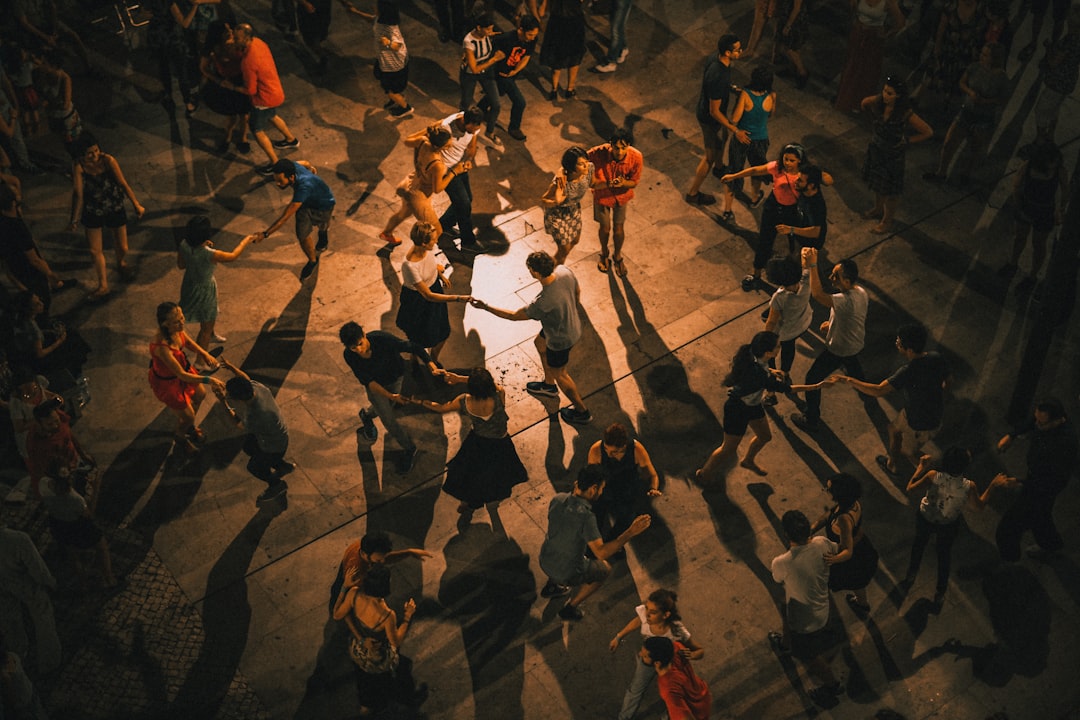
Contemporary dance is often celebrated for its expressive freedom and emotional depth, but beneath the artistry lies a sophisticated technical foundation. At Canoru Dance School, we believe that true artistic expression emerges not from abandoning technique, but from mastering it so completely that movement becomes second nature.
Whether you're just beginning your dance journey or looking to refine your existing skills, understanding the core principles of contemporary technique will transform your relationship with movement. Let's explore the fundamental elements that create powerful, expressive contemporary dance.
The Importance of Alignment and Posture
Proper alignment forms the cornerstone of all contemporary dance technique. Unlike some dance styles that emphasize a single aesthetic ideal, contemporary dance seeks alignment that allows for maximum efficiency, safety, and range of motion. This means understanding your body's natural structure and working with it rather than against it.
Alignment begins with awareness of your spine's natural curves. The vertebral column isn't meant to be perfectly straight but features gentle curves in the cervical, thoracic, and lumbar regions. Contemporary dancers learn to maintain these curves while moving through space, creating a stable yet flexible axis for movement.
Your pelvis plays a crucial role in alignment as well. Many dancers struggle with either tucking the pelvis too far under or allowing excessive anterior tilt. Finding neutral pelvis position—where the hip bones and pubic bone create a vertical plane—provides a stable foundation for leg movements and helps protect the lower back during demanding choreography.
Breath: The Invisible Foundation
One of contemporary dance's most distinctive features is its integration of breath with movement. Unlike classical ballet, where breath is often minimized for aesthetic reasons, contemporary technique treats breath as an active partner in creating movement quality and dynamics.
Learning to breathe fully and consciously while dancing takes practice. Many beginning dancers hold their breath during challenging movements, creating unnecessary tension and limiting their endurance. At Canoru, our instructors emphasize breath awareness from the very first class, teaching students to coordinate inhalation and exhalation with the natural rhythm of their movements.
Breath can also be used to initiate movement. When you inhale, your ribcage expands, creating a subtle lift through your torso that can begin an upward gesture. Exhalation naturally encourages release and can facilitate folding, rounding, or grounding movements. This breath-movement connection creates organic, fluid transitions that look effortless to audiences but require dedicated practice to master.
Understanding Weight and Gravity
Contemporary dance has a unique relationship with gravity. Rather than constantly fighting against it (as in ballet's quest for weightlessness), contemporary technique explores the full spectrum from surrendering to gravity's pull to momentarily defying it.
Release technique, one of contemporary dance's foundational approaches, teaches dancers to give weight to the floor and use the rebound energy for movement. This creates a quality of movement that appears natural and unforced while actually requiring significant strength and control.
Understanding how to shift your weight efficiently is essential for contemporary dance. Whether you're moving from standing to floor, traveling across space, or partnering with another dancer, knowing where your weight is and how to transfer it smoothly makes the difference between awkward, effortful movement and fluid, confident dancing.
Core Engagement: Your Movement Center
The concept of "core strength" has become ubiquitous in fitness culture, but in contemporary dance, core engagement means something specific and nuanced. Your core isn't just your abdominal muscles—it's the entire cylinder of muscles that stabilizes your torso, including your deep abdominals, back muscles, pelvic floor, and diaphragm.
Proper core engagement in contemporary dance doesn't mean constant muscular tension. Instead, it's about finding the appropriate level of activation for each movement. A slow, controlled leg extension requires different core engagement than a dynamic jump or a release-based fall to the floor.
At Canoru, we teach core awareness through exercises that help you feel the connection between your breath, your pelvic floor, and your deep abdominal muscles. This awareness allows you to engage your core without creating rigidity, maintaining the fluidity and adaptability that contemporary dance requires.
Articulation: Moving Through Every Joint
Contemporary dance celebrates the body's full articulation potential. Unlike dance forms that emphasize held positions, contemporary technique values the journey between positions, exploring how movement travels through the body sequentially.
Spinal articulation is particularly important. The ability to move through your spine vertebra by vertebra—whether rolling down through a forward fold or undulating through a wave—creates the flowing quality characteristic of contemporary dance. This requires both flexibility and tremendous control.
Foot and ankle articulation also receives special attention in contemporary training. Since contemporary dancers often work in bare feet, developing strength and mobility through all the joints of the foot becomes essential. This includes pointing and flexing through multiple positions, exploring weight distribution across different parts of the foot, and building the strength to move smoothly between standing and floor work.
Dynamic Range and Movement Quality
One aspect that sets contemporary dance apart is its embrace of contrasting movement qualities. A single phrase might move from sharp, percussive gestures to sustained, flowing sequences. Mastering this dynamic range requires technical control alongside artistic sensitivity.
Dynamic movement isn't just about speed—it's about the quality of energy you bring to each gesture. A fast movement can be light and delicate or powerful and grounded. A slow movement might feel heavy and melting or suspended and resistant. Learning to consciously choose and execute these qualities expands your expressive vocabulary.
This is where the technical foundation really serves artistry. When you have complete control over your alignment, breath, weight, and articulation, you can make deliberate choices about movement quality that communicate specific intentions to your audience.
Floor Work Fundamentals
Contemporary dance's relationship with the floor distinguishes it from many other dance forms. Rather than viewing the floor as something to leap away from, contemporary dancers explore it as a partner and support.
Learning to fall safely is one of the first floor work skills we teach at Canoru. This doesn't mean learning to collapse—it means understanding how to control your descent, how to distribute impact across larger body surfaces, and how to use momentum to continue moving rather than simply landing.
Rolling is another fundamental floor work technique. Whether executing simple log rolls or complex spiraling patterns, rolling movements teach you about momentum, sequential movement, and spatial awareness. They also build the kind of whole-body coordination that serves you in all aspects of contemporary dance.
Flexibility and Strength: Finding Balance
Contemporary dance requires both flexibility and strength, but more importantly, it requires these qualities in balance. A highly flexible dancer without sufficient strength cannot control their range of motion. A strong dancer without adequate flexibility may lack the full movement range that contemporary choreography demands.
Flexibility training in contemporary dance focuses on active flexibility—the ability to move into and hold positions using your own muscular strength rather than relying on external support or momentum. This type of flexibility is more functional for dance and helps prevent injury.
Strength training emphasizes functional movement patterns rather than isolated muscle building. Exercises often incorporate balance, coordination, and movement sequences that mirror the demands of actual dancing. This ensures that the strength you build in conditioning class translates directly to improved dance technique.
Spatial Awareness and Musicality
Technical proficiency isn't limited to how you move your body—it extends to how you move through space and time. Spatial awareness includes understanding levels (low, medium, high), directions, pathways, and your relationship to other dancers and the performance space.
Musicality in contemporary dance can be complex since contemporary choreography often uses non-traditional music or silence. Developing musicality means learning to hear and respond to rhythm, phrasing, dynamics, and silence. It means understanding when to move with the music, against it, or independently of it.
Building Your Technical Foundation at Canoru
At Canoru Dance School, our approach to teaching technique balances structured progression with individual exploration. Our beginner classes introduce these fundamental concepts gradually, allowing students to build understanding and capability without feeling overwhelmed.
For intermediate and advanced dancers, we continue to revisit these fundamentals while adding layers of complexity. Even our most experienced students benefit from regular return to basic principles—there's always deeper understanding to be found in the foundations.
We also recognize that every body is different. Technical excellence doesn't mean making everyone move identically, but rather helping each dancer find their most efficient, expressive, and safe way of moving. Our instructors work with students individually to address their specific strengths, challenges, and goals.
The Journey of Mastery
Mastering contemporary dance technique is not a destination but an ongoing journey. Even professional dancers continue to refine their understanding of these fundamental principles throughout their careers. Each return to the basics reveals new layers of subtlety and possibility.
The reward for this dedicated practice is movement that feels both powerful and effortless, technique that serves rather than constrains artistry, and a physical intelligence that allows you to express yourself fully through dance.
Whether you're taking your first contemporary class or returning to dance after years away, remember that every expert dancer began with these same fundamentals. With patient practice, mindful attention, and supportive instruction, you'll build the technical foundation that allows your unique artistic voice to emerge.
Ready to Build Your Technical Foundation?
Join us at Canoru Dance School and experience the joy of mastering contemporary dance technique in a supportive, professional environment.
Explore Our Classes